Burning Desire For FIRE

Financially Independent, Retired Early(ish) at 57.

Brazil: Day 28: Rio de Janeiro.

Today was a free day, so I chose to do the optional tour to Sugarloaf Mountain.

I almost always pick up the optional tours. I figure that they’ll take us to places that we’ll want to see anyway, and it’s a lot less mucking around.

Zero in here. We’re waiting for the cable car. These climbers are making their way up this cliff.

When we came back down again, they hadn’t made much progress.

Charlie Chaplin is alive and well and living in Rio!

A couple of views of the Atlantic as we took the cable car to the first (lower) part.

Look who I saw in the distance. It was perfectly clear today… damn…

I liked the sprinkling of buildings going through the mountains.

The marina. The views were amazing.

And then a plane flew right down into the harbour to land. We had no idea that’s how we got here a couple of days ago.

See the twin towers forming a cross? The whole thing was designed to be viewed from here. The pyramid-shaped cathedral is right in front of it.

It was a sparkling day.

This is the reason why Rio de Janeiro is named after a river, even though it has no river running through it. The mouth of the harbour is so narrow that the first Portuguese explorers thought that it must be a river.

After galloping around the lower part, it was time to ascend to the top. All 396 metres of it.

And here’s why it’s called Sugarloaf Mountain. Back in the day, the ships used to export sugar in these cones… called Sugarloaves.

Up we go to the highest point. Christ the Redeemer is still visible.

The vultures soar very high.

They start to develop a sense of style very young here.

Please excuse the smudge in the middle. It was on the window of the cable car. The curvy beach at the top Copacabana, where I was walking last night.

How wonderful! A marmoset, right beside the path. So tiny.

It was like a last farewell from the wildlife of South America.

Once you know the sugarloaf history, it’s easy to see why they named it.

This is a replica of the Paris Opera House. It was built when all of the cities in the new world were desperate to appear sophisticated and French.

The old aqueduct used to provide the city with water from the mountains. Now, trams run along the top of it.

It’s nice to see that they’re repurposing it, rather than just knocking it down.

The cathedral of St Sebastian. Patron saint of the city and the Portuguese army.

1964 – 1979

Brutalist style. Our guide came in with us because he likes to see the “wow” moment when people see how different the interior is to the exterior.

It’s pretty large. It seats 500, with an extra 1,500 standing room spots.

This is the unfortunate reflection on the building opposite…

This terrifying statue is of Mother Teresa. What a nasty piece of work she was. I was horrified when I found out how she treated her patients in the slums of Calcutta.

However, THIS statue, I love.

It’s called the ‘Jesus Homeless’ statue, by Canadian Timothy P. Schmalz.

What a fabulous idea. It encapsulates so much.

This is what the twin towers look like on the ground. You can see how the cross is formed to be able to see it from Sugarloaf.

This is the Royal Palace.

In 1808, the Portuguese royal family fled Napoleon and came to Rio. They stayed in the house of the Viceroy, so by default, it became the royal palace.

Queen Maria, she was insane. I don’t know if she was afflicted before she arrived in Rio, but that’s how she died.

Her oldest son was John, so he inherited the throne.

His oldest son was Peter. After Napoleon was defeated, he refused to return to Europe.

“I will stay in Brazil. Here is sunshine, soccer and Samba.”

He gave up all rights to Portugal.

So his uncle took the throne. This made Peter cross, as he wanted to put his sister on the throne.

I have no idea what happened after that, as the bus passed the next attraction and our guide switched to talking about that.

I’m going to do some research, though. It sounds like an interesting story.

This is the Olympic flame from 10 years ago. They turn it on whenever the Olympics are on. I like that.

Who knew Utopia was so close?

Street art. This is in a section of town that the city is trying to rejuvenate by creating residential buildings.

This is our last night on the trip. In a few minutes I’ll be meeting everyone in the lobby and we’ll be going to a farewell dinner with samba music.

It’s funny. This was a very long trip, but it’s flown by. We’re all so glad that we chose this one. We’ve seen so much. Who knew South America was so interesting???? 🤣

Tomorrow we embark upon our last 3 flights to get home.

Dad joke of the day:
Brazil: Day 27: Rio de Janeiro; Christ The Redeemer.

Speaking as an atheist, I found this religious statue very impressive. This was unexpected.

Aside from anything else, this is an extremely popular attraction. We left our hotel at 9 AM, and it took just on 3 hours to get there, see it, and leave. There were a lot of people there, and by the time we left, the queues to get in were frightening. Thank goodness we aren’t in high season.

As we were coming down the escalator, Terry said,” I think we just met half of South America just then!”

Thank goodness, as well, that we aren’t living in a time where you had to suffer to see the holy thing. A Swiss- made cog train brought us 710 metres to the top.
The big tip… sit on the right side.

There’s lots of this.

Until unexpected gaps give you this. On the right side.

You had to be quick.

Brazil is rapidly winning my heart with its lifts and escalators at its attractions. I think I’d move here, if I could speak Portuguese.

Christ The Redeemer was made in 1931, and is of the New Seven Wonders of the World. It stands 30 metres high and 28 metres across, fingertip to fingertip.

It was sculpted by French-Polish artist Paul Landowski and the face was crafted by Romanian sculptor Gheorghe Leonida.

It looks like carved stone in all the photos, but it’s not. This is a close-up of the sandstone mosaic pieces that cover the statue. There’s millions of them.

There’s a chapel underneath. We poked our heads in, and honestly? I was shocked that such an impressive monument would have such a tacky chapel attached to it.

Seriously, look at the google eyes of Jesus here. It’s ridiculous that this should be connected with the statue outside.

The clouds hadn’t properly lifted yet, but you could still see a good view of the city.

Sugarloaf Mountain. We go there tomorrow.

Obligatory selfie.

This little monkey was hanging around behind the ice cream cart, waiting for the slightest chance to grab something.

A snatched view of the city on the way down. I bought a Christ the Redeemer key ring for my Christmas tree. It’ll go nicely with the angel from the Vatican.

More mate drinking out in the wild. She was sitting with two friends. They all drank from the same mate cup, using the same straw.

Lunch time! We were given an hour to explore the Escadoria Selaron… the series of steps by Chilean artist Jorge Selaron.

In 1990, Chilean painter and ceramist Jorge Selarón began renovating the dilapidated, 125-meter-long staircase directly outside his house. Using bright yellow, green, and blue tiles to honor the Brazilian flag, and red for his home country of Chile, it quickly became his life’s work.

His neighbours first mocked him for “wasting his time “, but they soon changed their tune when tourists started flocking to the area. Over time, tourists and travelers from all over the globe began bringing and mailing him tiles from their own home countries to add to the mosaic.

He committed suicide on the steps when he was 65.

There are some tiles from Australia here, so I kept an eye out.

Little did I realise at the time, but I was sitting right in front of one when this picture was taken.

It was the kangaroo hopping towards the sun.

I couldn’t resist taking a video of this!

Colour and movement.

Literally on the street where the steps lead from.

Back in the bus, a little reminder that life isn’t easy for everyone.

The famous wave paving of Copacabana beach. Our hotel is just one block from the beach. These stones are from Portugal.
Julio, our guide, said that it was only a 2 or 3 kilometre walk to Ipanema from here. After we finished our tour of the city, I decided to go and do that walk.

Copacabana beach in winter. It was around 25C.

They are keen on their beach volleyball here. There were hundreds of courts set up. Later, on my way back to the hotel, big lights were switched on along the line of the footpath and many of the courts were full.

It was a LONG walk. I didn’t realise that Ipanema is on the other side of a little peninsula. Luckily, there was a map at the end of Copacabana beach and I was able to work it out. It was starting to get darker, but I was nearly there.

Mission accomplished!

I would have liked to stay and watch the sunset, but my internet dropped out on the walk. I didn’t fancy walking all that way back in the dark, so I set off again.

It was beautiful.

And the paving is different here!

Every time I hear “ The Girl From Ipanema” from now on, I can smile. I’ve been there.

On the way back, I bought a wrap to take to Egypt. It has the same design as the paving.

Dad joke of the day:
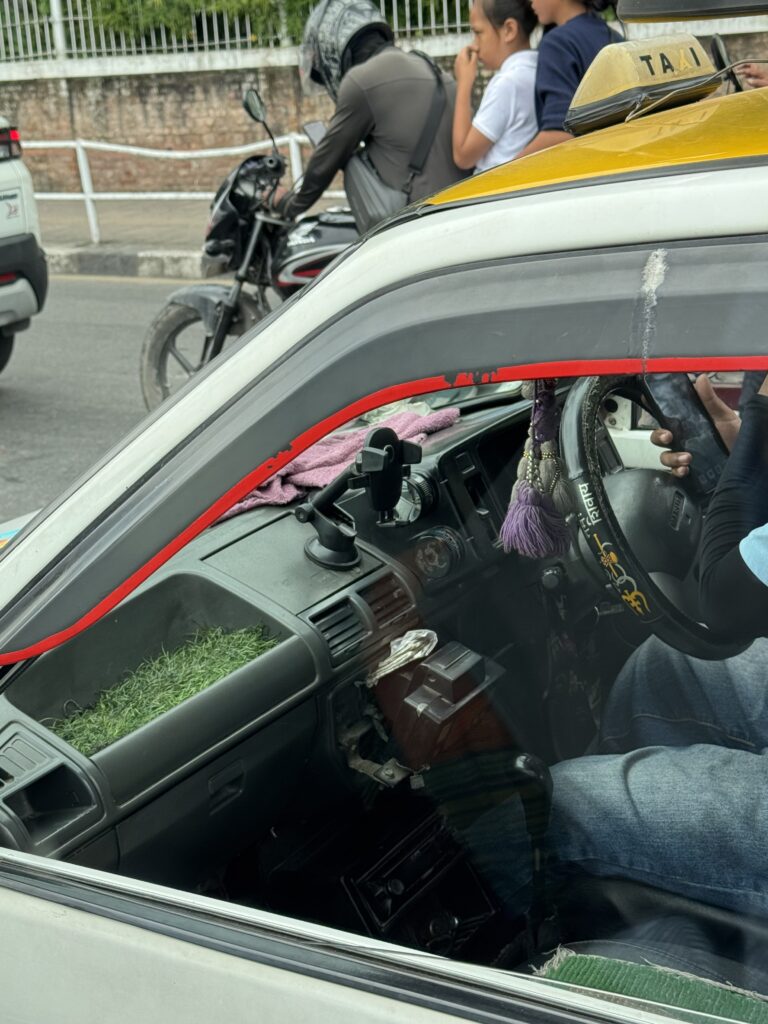
Brazil: Day 26; Iguazu Falls on the Brazilian side.

Don’t take a tour to see the Falls if they’re only going to take you to one side. For the Iguazu Falls, you need to see both the Argentinian and the Brazilian sides.

Just after 8AM, we crossed the Friendship Bridge from Argentina into Brazil. Our guide allowed plenty of time for us to get through border controls.

“ There are many variables to affect how long a border crossing can take. How many other people are ahead of you, the mood of the border officer…”

Fortunately, it was only around 20 minutes, and we were off to the National Park.

I don’t know how they arranged the rainbow, but it made my day!

The unexpected thing about this trail is that the waterfalls just keep on coming.

At first, you see the ones on the Argentinian side that were were above, so couldn’t see yesterday.

Then, the Brazilian ones.

There were more people on this side, but everyone was moving along the trail and were so happy about what we were seeing. I mean, how could you not be?

The colours!!!!!

Here was where we were warned about getting wet. The breeze blows all of that water all over you. Today, I wasn’t wearing all of the wet weather gear that I was yesterday, so I walked out as far as I could, then retreated.

You can see how high the water level is.

I have deleted so many photos. I just liked this one, so here it is.

Remember The Devil’s Throat from yesterday? Here’s what it looks like at the bottom.

Isn’t it incredible? How could this be real?

Haha! This was right by the end of the trail. I had to show you just how close we got to the water. But yeah. I got wet.

One last look. Where the rainbow hits on the right? That’s where we were yesterday.

Now this didn’t just make my day. It made my DECADE.

Finally a tourist attraction puts in a lift, so I don’t have to walk up hundreds of steps. I think I’m in move with however had this idea and made it happen. I was so happy.

I don’t mind walking down steps. I simply hate going up.

One last backwards look…

… and then it’s up, up, up we go.

Here’s another coati. It was sneaking around, scavenging food. Tourists, who should have known better, were feeding it until they were told off by the people working there.

You can see how strong their claws are. The little guy on the tree trunk was chilling, just gripping with his claws. It was effortless.

Now comes the story of the 25 minutes that we had to get from one flight to the next. Today, we had 2 flights, with a screamingly tight timeline. Ever since I got the tickets, I was nervous about it.

I was prepared to have to race across the airport with the clock ticking down, just as we did in Taiwan, where we arrived with about 3 minutes to spare.

I was the first one in our group out of the plane. My digital boarding pass told me that our next gate was 222. I sped out of the plane and into the terminal. I turned around to check the number of the gate I’d just come out of…

… to see 222 above me.

I couldn’t believe it. I’ve never seen such efficiency in scheduling ever. We were suddenly in no rush at all. After all the stress I’d been feeling, it was a big relief.

Maybe this was what the rainbow was foretelling?

Overseas, people are allowed to bring their pets to the airport. I took this one for Blogless Sandy. She has a Frenchie.

Liz, Val and I finished the day with caipirinha cocktails… the national drink of Brazil.

Yum!

Dad joke of the day:

Argentina: Day 25; Iguazu Falls.

Today, I realised a travel dream. It was back in 2022, just before Christmas. I’d just come back from Antarctica, while the other people in my travel group stayed in South America for longer.

Eneko posted a video of himself at Iguazu Falls, in a boat on the river underneath a huge waterfall. Something about that video never left me. I knew I’d have to go there someday.

Today, 4 years later, I’ve now ridden on that same river and had my face covered with water from that waterfall. Isn’t life fantastic?

Iguazu Falls, on the Argentinian side, has 3 trails that you can walk. I did the Devil’s Throat, and the Upper Trail, before taking the boat ride.

The Devil’s Throat was unreal. It took around 15 minutes to walk to it, on a steel walking track that took us over about 27 rivers. Ok, I’m exaggerating slightly, but it was a LOT of water. As an Australian, I don’t think I’ve ever seen this much water in one place before.

And then this happened.

I zeroed in on one small section. Look at the amount of water going over the edge!

The Devil’s Throat is a circular hole, where torrents of water flow in. There was a huge amount of rain in the area recently, and 2 days ago the Devil’s Throat was closed because of high water levels.

Fortunate Frogdancer strikes again!

Who’s ever heard of a striped waterfall?

The mist rising up from the force of the water.

The colours…

The waterfalls go on forever…

But we still had Things To See, so it was back along the bridge to the little train we rode in on, and we went to the Upper Trail.

This was a walkway suspended above many different waterfalls. Both trails were flat and extremely easy to navigate, so don’t let a laziness streak put you off. Anyone can walk these trails.

It looks almost solid as it goes over the edge, or maybe “viscous” is the word I’m thinking of.

Here’s a still from the same waterfall.

This is a coati, a kind of cross between a raccoon and an anteater. We were warned against feeding or touching these.

Nikki saw a tourist offering one of these some food. It leapt at her, tearing up at her chest. I chose to give this one as wide a berth as I could.

This looks like molten silver.

I finally unwrapped the poncho from Cusco. It was time for the river ride.

I brought the waterproof over-pants that I originally bought for Antarctica. At the time, I thought they would be a one-off. Now, they’ve been to Greenland and now Argentina. Part of this trip is getting “a shower” under the spray from the waterfalls. Seeing as I have very few clothes with me (only having carryon luggage), I didn’t want to cope with wet clothes. I was PREPARED.

Of course I sat at the front.

There comes a point when you have to put your phone away, so I can’t show you footage of the whole thing. But see that boat on the water? That’s what our boat looked like.

This is the closest I was willing to risk my phone. Remember how I said I was sitting at the front?

The water from the spray was full on in my face. I had to close my eyes and lower my head. After a few seconds, I wiped my eyes and opened them.

We were so close to the waterfall! Like, just a few feet away. I could hardly believe it. The sound of the water was overwhelming and I was so happy.

Wet face, blue phone lanyard sticking out… living the dream, baby!

On the way back to join the rest of the group for lunch, we saw this Cappuchin monkey.

The guide said he was probably the head of the troupe, checking the area to see if it was safe for the group.

We saw a toucan!

This isn’t my photo. Lyn from the other group posted this, and it was almost exactly the same as the one we saw, except ours was facing to the right.

I knew they were in the area, but I didn’t expect to see one. It was very exciting.

And finally, two kids sharing some chips they scavenged from the bin.

All in all, not a bad day…

Dad joke of the day:
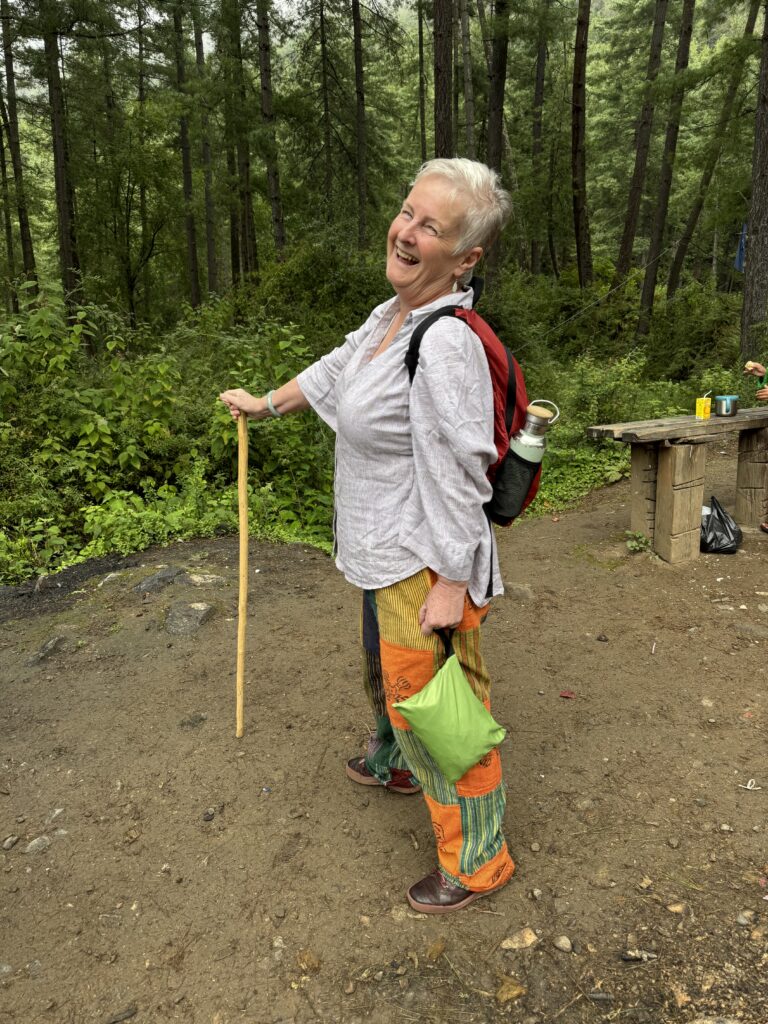
Argentina: Day 24; Puerto Iguazu.

I’m at the tail end of a tour that has something like 16 flights in it, and I must admit that I’m getting a little tired of airports and the queuing and the waiting.

So imagine my delight when I lifted my eyes from my eBook to see a couple sharing mate exactly as Victoria described.

She had a thermos with hot water, and she poured a little into the mate container and had 2 swallows until the water was gone. She then poured a little hot water into the mate, and handed it to her husband, who absentmindedly drank while he was concentrating on his phone.

They went back and forth like that. It was nice to see it in person.

I wandered around the hotel grounds after we arrived. There were a few greenhouses and some tracks throughout the gardens.

I don’t know how this bird sees properly.

This place has a butterfly house!

When we found that the rooms weren’t going to be ready for a couple of hours, Sally, Steven, Terry and I decided to walk into town to grab some lunch.

The only directions we were given was from the tour guide… “ Turn left and keep on going for 20 minutes.”

It was longer than that. We organised a taxi for the ride home.

Look! Horses!

Now that I’m such a dab hand at riding, maybe I should have gone over and offered to help?

After lunch, I decided to have a nap, because last night was a very late night, what with uploading all those videos.

Argentina is playing tonight in the World Cup. We’re hoping they win, otherwise the whole town might be shut down in gloom and doom. Tomorrow is when we see the Argentinian side of the falls. 😃

Dad joke of the day:
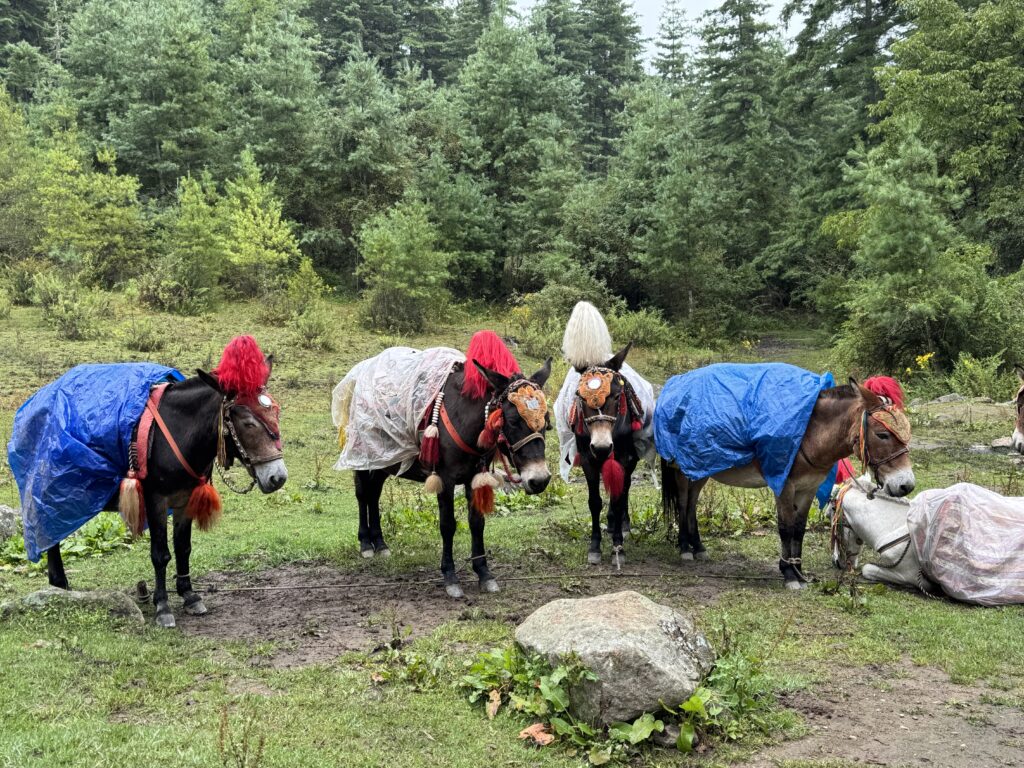
Argentina: Day 23; Buenos Aires: The Gaucho Ranch.

Today a third of the group headed out into the Argentinian countryside to a gaucho ranch.

“Gaucho” is basically a shared lifestyle and traditions.

It’s not a class system. Farm owners and their workers are all gauchos.

We were going to see gauchos do their thing, and to eat prime Argentinian beef. And omg. It was divine.

The cattle in this country are grass fed, not finished off with grain in feed lots. The beef is better. Argentinian beef is so tender because the land is so fertile and flat. The cattle don’t need to get much exercise, so they don’t develop stringy muscles.

Mate (pronounced “Mah Tay) is a herbal drink that the Argentinians drink just with friends and family.

It has a special cup with a silver straw that everyone drinks from. 

Our guide for the day, Victoria, prepared a cup for us. 

She made the bitter one first, which I liked the taste of. It was like a very strong green tea.

Normally, the straw is used by everyone without cleaning it, but Victoria knows that our culture doesn’t like that, so she wiped it after each person drank.

Mate is very important in Argentina. It’s a very good way to have important conversations without confrontation. It’s a good way to break the ice, but it isn’t sold in cafés. Victoria said that the only way to taste mate is if an Argentinian offers you some.

San Antonio was established around 1700. It was originally a coach stop, but soon they started working with silver and leather, particularly whips.

To our surprise, we stopped in the town to taste-test some chocolate, and then we visited a silver workshop.

It had all sorts of things for sale. A small American tourist was excitedly telling his parents that he wanted to buy a dagger so he could stab someone with it.

Charming…

The colonisers planned the towns in the same way. A central square, with a high school, a bank and government buildings, which enabled them to keep the population under their constant view.

This road to the ranch strongly reminded me of the roads on Kangaroo Island.

Here is the ranch. We were welcomed with wine, and the most delicious empanadas I have ever eaten.

The ranch had a lovely, relaxed feel about it. There were a few other groups, but nothing felt crowded or rushed. There were a pack of 7 or 8 dogs roaming around, ranging in size from a Great Dane to a small terrier. The dogs were as friendly as the people.

Victoria, our guide for the day, was very excited that this guy was here.

“You’re very lucky,” she said. “This gaucho is famous in the area. He is very good at what he does.”

And then look at what happened next. I RODE A HORSE.

People who’ve been reading the blog for a while will know that I’ve ridden a camel in Central Australia and an elephant in Thailand. But those animals were tightly controlled.

This was just me, putting my life in the control of a horse.

It’s quite high up…

I was feeling a little more confident…

… until it wanted to lean down and grab an apple from the ground.

Anyway, off we went. I was told to not to pull on the reins, and to keep the reins in one hand, and hold onto the saddle with the other.

We ambled off. It was all going well, until I realised that my horse wanted to be at the front of the line. I can understand; I like to be at the front too.

It saw an opportunity and took it. Suddenly, we were trotting.

I knew what was happening, after all, I’ve read about trotting. I just didn’t know how to react.

The gaucho leading the horses told my horse off, and Sally from our group told me to grip the horse with my legs and pull on the reins if I wanted it to stop.

After that, the horse and I got along beautifully. Every time he started to think about doing something exciting, like leave the group to inspect a pile of hay, I’d twitch the reins and he’d roll his eyes (probably) and do the right thing.

I was proud of myself for trying this, as I wasn’t sure I’d be able to do it.

The rest of the group went for a carriage ride.

During the most delicious lunch, we saw the belt and dagger that is part of the gauchos’ heritage.

The belt, with money, was originally how the gauchos carried their wealth around. The thinking was that no one could steal it if it was with them.

The knife is called a Facon. This one belonged to his grandfather.

After lunch, we were treated to a fantastic show. The music was drifting through the ranch all afternoon. It was magical.

At first, there was dancing by people who knew what they were doing.

Then the tourists were invited to join in.

It wasn’t as polished. In fact, Val, who was watching, called the Australian section “a bit of a mess.”

Then we were treated to The Horse Whisperer.

This was incredible. We were asked to stay very quiet so we didn’t spook the horse, and then we saw the following.

(Don’t be put off by the number of videos. Please watch them all in order. They’re only 10 seconds long. Hotel wifi only lets me upload vids this short, but I REALLY want you to see this guy. It’s almost as if he hypnotised the horse.)

Isn’t it incredible?

It was a brilliant day. I’m so pleased that in the space of the two days we have in Buenos Aires, we saw both the city and the country.

The gauchos of Argentina are legendary. I’m glad I got to experience a taste of what they do.

Dad joke of the day:
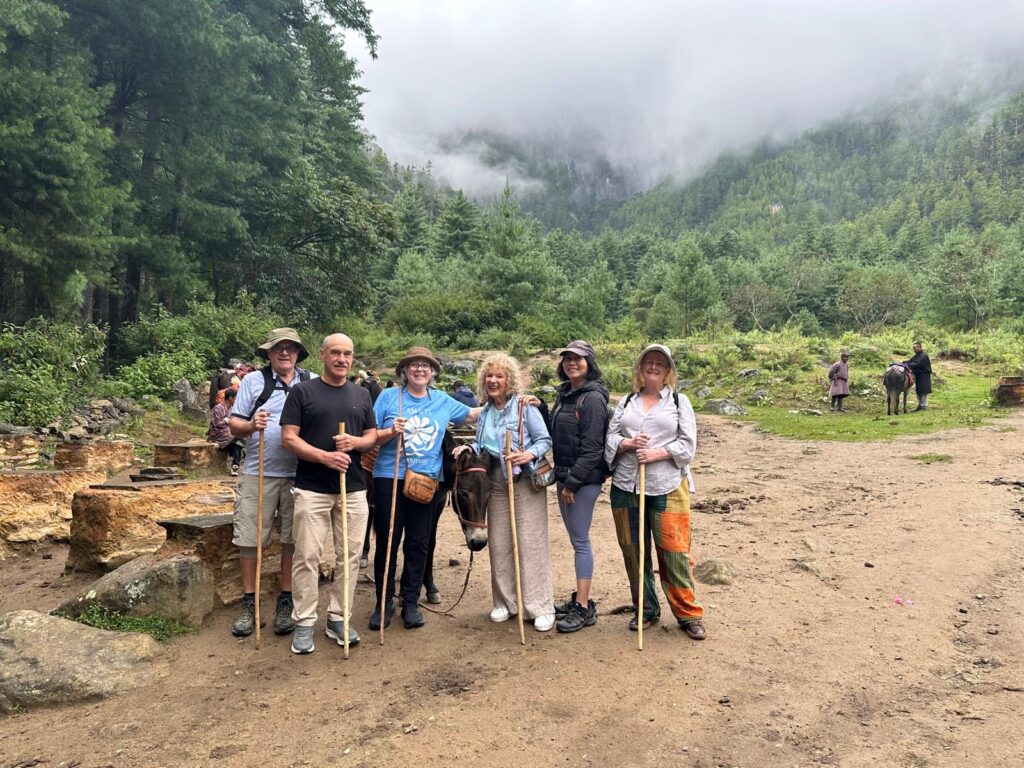
Argentina: Day 22; Buenos Aires.

I’m seeing dachshunds everywhere! So many dogs in Buenos Aires, all being lovingly walked by their owners.

Today was a City Tour, followed by a tango dinner. Nice!

This obelisk in the centre of downtown is a place where they get together when they are protesting or celebrating. Especially for the football! It’s a feature of the city.

We drove past the Opera house, but I didn’t get a picture.  I didn’t realise what a fabulous story was connected with it!

There were 3 architects involved in the project to design and build the Opera House. The first architect died, aged 44.

The second architect was fit and healthy, but he arrived home early one day and discovered his wife with the butler. The architect was shot and killed, aged 44.

Of course, rumours started circulating that the project was cursed.

To get over this, the last architect was hired. He was older than 44, and the opera house was finished.

Our first stop was the main square.

In 1580 Buenos Aires was established by the Spanish. There was originally a fort on the ground where this building stands , because the local population were, understandably, less than enthusiastic about being enslaved.

Government Palace is where the president works . He commutes by helicopter from his home in the country. Don’t we all?

Pink building because the blood of cows was mixed with lime and fat. This was to protect it from humidity.

Eva Peron’s balcony is to the left, with the 3 arched windows.

Stones around the statue are a covid memorial. Every stone is a memorial for a person who died from Covid. There are literally hundreds of stones. It was really sad, and a sobering reminder of how awful it was in so many places.

People who now insist that Covid was a hoax are fools.

Suddenly there was a flurry of activity outside the presidential palace. It was the changing of the guard. They were on their way to the tomb of one of their greatest revolutionary heroes at the cathedral down the road.

As we walked towards the cathedral, we passed by the statue commemorating the day of liberation from the Spanish.
Andrea, our guide, asked if we’d ever heard of the Lost Mothers. (I had, but I thought it happened in Venezuala.)

During the last of a string of dictators in the 1970’s, over 300,000 people were kidnapped, tortured and killed by the regime. In an effort to prevent outsiders from discovering what was going on, many prisoners were lightly sedated, then pushed from planes in remote parts of the country.
Women who were pregnant when they were taken prisoner were kept until they gave birth, then their babies were placed with families loyal to the regime. None were returned to their birth families.

The Lost Mothers are the mothers and grandmothers of those people stolen and hidden. They originally marched to end the regime, but every Thursday they still march to remind people of what has been lost. They wear white headscarves to represent the nappies of their children and lost grandchildren. DNA testing has brought 134 ‘babies’ home to their birth families, but many more have been lost.

The eternal flame burns outside the cathedral.

The previous Pope, Pope Francis, worked in this cathedral for 20 years before he was elected to the top job.

The floor is covered with mosaic tiles from the UK, all in the Passion of the Christ and the Crown of Thorns. That last one sounds like a starfish to me, but I suppose that’s an Aussie thing.

Here’s where the guards were headed. This room houses the mausoleum of General José de San Martín, Argentina’s most revered revolutionary hero and a primary liberator of South America. It also has a couple of other generals and the Unknown Soldier.

His casket is buried underneath. He died in France, and was brought here. He was buried in a diagonal position as the casket didn’t quite fit… maybe because he was a Freemason? Or maybe they were bad at measurements.

Then we drove to the most FABULOUS neighbourhood.

This is the Caminito neighbourhood. It was a dump after the railway left, until an artist started to introduce colour to the place. Pretty soon, it all took off and now tourists flock here.

I nearly bought a painting but I restrained myself.

It was a wonderful place to walk around. There was a couple dressed up as tango dancers. They were grabbing tourists as they walked by, making them pose for a photo and then charging 10USD for the photo their partner took. The man tried to grab me, but I wasn’t having it. (Today is a no-spend day for me.) But it was fun watching them work.

Who knew that there is an Australia Park here, complete with massive concrete kangaroos?

These phone boxes reminded me of London. They’re standing near a MASSIVE rubber tree, with a fun twist.

They have poles holding up the branches, but Atlas is giving a hand as well.

Buenos Aires is a very clean, modern city. It was a pleasure to walk around here.

“We have no natural disasters here,” said Andrea. “No earthquakes, no hurricanes, no tornadoes. The only natural disasters are the politicians!”

The highest building here is only 54 floors. It’s residential.

There are only 3 million people in Buenos Aires. The city seems larger somehow.

Our last stop before returning to the hotel was the oldest cemetery in the city.

It’s the Recoleta Cemetery, established in 1822. Like the Père Lachaise Cemetery in Paris – where I kissed Oscar Wilde’s tomb – it’s full of mausoleums as well as graves.

The mausoleums here have basements. The people who built them were thinking ahead, working out how to fit as many family members into this expensive place as they could.

Back in the 1820’s and onward, Argentina was going through a boom time. As the rich were building their houses, they were using the same materials for their mausoleums. There’s marble and stained glass everywhere.

The contracts for each mausoleum is for 99 years. Families have to pay an annual fee of $40/ square metre for maintenance.
Scattered around the cemetery are crypts that have been neglected and are falling apart. No one can touch them until the 99 years is up. Then someone new can buy it and either knock it down or renovate.

5,000 crypts here.

Here’s what is believed to be the oldest grave here. This is the wife of the great hero whose tomb we saw at the cathedral.

She looks young. His parents were originally buried here too, but at some later stage they were moved to another town. That seems a little creepy to me.

Inside.

This one had a glass door, so we could see the coffins. Or maybe, so that they can see us?

Yikes!

This is apparently the most expensive one here. It was built in the early 1900’s, and the Nobel Prize winner for Chemistry in 1970 is buried here as part of the family. It has semi-precious stone ornaments, mosaics under the roof and takes up a fair bit of space.

This is the plan for a new mausoleum that’s being built after one of the neglected ones was sold. Look at all of the marble!

And then we came to it. The place where Eva Peron rests… finally.

This is the crypt of her Brother-in-law’s family. Duarte was her maiden name.

When Eva died she was only 33 years old. She had cervical cancer. Peron wanted her embalmed, against the wishes of her family. 

People lost their minds with grief when she died, as she and her husband were very popular with the working class people, as they introduced many reforms. 

She lay in state in an open casket for weeks, until one day her body was stolen.

A radical group who hated Peron took her body out of the country and buried it in Milan under a different name. 

He body was in Milan for 15 years.

In 1955 there was a revolution by the people who stole the body.

They released the body to Peron and he returned to Argentina with his 3rd wife and the body of Eva, his second wife. The story goes that Eva rested in state in the dining room on a platform near the table for 3 years until his death.
Isobel, the 3rd wife, must have been a very patient woman!!

Her name was Liliana. She and her husband lived a very lavish lifestyle, which came to a sticky end when she was killed in an avalanche while skiing in Austria.

She’s in her wedding dress. She’s fenced off from the public, because people kept touching the dog’s nose for good luck and it was starting to damage it. There was an urban myth going around that the dog died at the exact moment that she did, but that’s not true. Her mother took care of the dog for years after the accident.

Hazel looks like this sometimes.

We were in for a treat tonight. A dinner – all food and alcohol included- at a Tango place.

It was an excellent night, but I can’t record everything, so here are some snippets.

oof. I’ve been trying for half an hour to upload another tango vid, and they keep getting rejected. I’m off to bed.

Tomorrow… gauchos!

Dad joke of the day:
Peru to Argentina: Day 21; Travel Day.

Oof. This is what a 3:30 AM alarm looks like. It was a very early start to get to the airport for our flight to Argentina.

I was put in the very last row of the plane. This is my window seat.

I caught up on sleep for the first part of the trip, and read half a book during the other.

Our guide for Buenos Aires suggested a steak house. It was a beautiful meal. I waddled back to the hotel after eating most of what you see on the plate.

Liz and Val on the way back from the restaurant.

City tour of Buenos Aires tomorrow. 😃

Dad joke of the day:
Peru: Day 20; Puno to Lima, travel day.

The bag on the left is the one I bought in Cusco at the hotel. It’s jam-packed full of souvenirs and gifts. Honestly, you can’t take a knitter/crafter to Peru and expect them not to go a little crazy.

I was careful to only buy knits that I wouldn’t ever make. Multi- coloured things involving lots of thought and attention to detail. I know my limitations.

Oh! I heard a hilarious epilogue to the troublesome noisy neighbour. I didn’t hear a peep from her last night… because she changed rooms!!!!!
I’m glad that she had all the inconvenience of packing everything up and moving, then unpacking again. Meanwhile, I had a decent night’s sleep.

In addition, I found out the reason why the music was so loud… she brought her own radio from Australia! Who does that?

Anyway, tonight in Lima, she’s across the hall.

After we got back to the hotel, I spent my time working out my luggage, just in case the international flights are pickier about cabin baggage than the domestic flight today was.

I finished a book I started at the beginning of the day, called “I Remember Everything “ by Fiona Wilkes. Flying is very good for chopping through books. There’s a lot of waiting around, plus in Sth America the domestic flights don’t have screens. So far, I’ve read 9 books since this trip started.

I had a few Peruvian Sol to use up before we leave Peru forever. Liz, Val and I went to our favourite restaurant in Lima, where I emptied my wallet of all things Peru and paid the balance by card.

Most people would probably order my meal for the tuna steak. I ordered it for the potato au gratin. It didn’t disappoint.

Tomorrow we have to be on the bus, wheels rolling, by 5 AM. We’re flying to Buenos Aires. I’m starting to get excited. One of the main reasons I booked this trip is getting closer…

Dad joke of the day:
Peru: Day 19; Lake Titicaca.

So, do you want to hear what happened last night, after I pressed “publish” and then wanted to go to bed?It’s something that in all my travels, I’ve never experienced.

But first let me back track a little.
It was soon after 8 PM. I’d just finished dinner, and I was reading the last 20 pages of my book before getting stuck into the blog for that day. Music suddenly roared from the next room. It was LOUD.
It was Spanish music coming from the tv. I wondered if I should go and knock on the door and ask them to turn it down, but hey. It was only 8 o’clock. I was reading and writing, not trying to sleep, so why make a fuss? They’ll turn it down soon, right?

I pressed “Publish” on the blog. I sent it to the frogblog and to the group WhatsApp chat. It was 10 PM. The music was still blaring. We had a very early start in the morning…

I decided to thump on the wall. That’s when I discovered that the walls are made of brick. Music kept going.

I grabbed my key, and even though I was in my pjs, I went into the corridor and knocked on the door. Getting progressively louder as the music kept playing.

omg. I went back into my room, and after wondering if I could sleep through it and deciding that no, I really couldn’t, I called Reception.

”We’ll call them. If the music keeps playing, then call us back.”

I heard the phone ringing through the wall. It rang for ages. The music continued. I called back.

The girl at Reception offered to change my room.
“No thanks, “ I said. “ I’ve done washing and I’ve unpacked and everything is organised. Why should I be the one inconvenienced when I’ve done nothing wrong?”

Then she said the words that changed everything.
“The lady in 404 is a member of your group.”

Instantly, I knew who it must be. Remember the woman who woke up the whole camp in the Amazon screaming about lost papers that she’d actually forgotten to bring with her?
Every day, without fail, she’s done something selfish that has annoyed the rest of the group.
I asked between gritted teeth… “Is her name BLANK?”

Of course it was.

They tried twice more to call her, then they sent a security guy up. I heard him gently knocking on the door, so I went out and said, “That doesn’t work,” and then I pounded on the door, calling, “BLANK, OPEN THE DOOR. IT’S FROGDANCER! BLANK!”

The music continued, unabated.

The security guy looked at me and said, “Do you think she’s drunk?”

I sighed. “I don’t know. I think she’s probably fallen asleep.”

The next step was for him to use a master key and open the door. Before that happened, we heard the phone ringing through again.
We heard her pick it up. The music turned down very quickly so BLANK could hear Reception on the other end of the line.

Then came the thing that made my blood boil.
We heard her say to Reception, “Oh no, the music isn’t very loud at all. And you shouldn’t knock on the door so loudly. I scared. You should call me on the phone.”

WTF? No accountability, no recognition that perhaps she’d been inconsiderate… nothing. I hate that. I really do.

She didn’t open the door to apologise, though she knew darned well it was me on the other side, not a gang of Peruvian marauders out to steal her stuff. No guts.
So I posted it on the group WhatsApp.

Bad behaviour gets worse if it stays in the shadows. I chose to shine a light on it. I have received lots of support from the group.

This won’t split the group or cause anyone to be on the outs. We still have two weeks to go and we all have to coexist together. But if she tries to pull stuff like this again? I won’t be suffering in silence. She’ll be called out.

She’s poked the bear.

*******

Anyway, it’s time for some fun facts about Lake Titicaca.

The border between Peru and Bolivia runs through the lake.

The deepest part of the lake is 2,800 metres deep.

It’s the highest navigable lake in the world.

“They fish for the evening, now they return for the day.”

There’s a soccer field next to the water. “ When the ball falls into the water, it’s water polo time.”

Man-made island, in the shallowest part of the lake.
There are around 2,000 people on the islands, but it’s getting less all the time. It’s a hard life here, and the younger people tend to want a more modern life.

When I stepped off the boat onto the island, it was a strange feeling. It felt reasonably solid, but I knew there was water under our feet.

We gathered for a demonstration of how the islands are made. Basically, they grab the roots of the reeds, separate them into manageable chunks, then bind them together with rope and anchor them to the bottom of the lake… “otherwise we’ll wake up in Bolivia!”

They barter with people from the mainland to get wood and rope to hold the roots together

Then they pile layers of reeds on top, weave some houses and Bob’s yer uncle.

Unfortunately, the reeds are hollow, so they are very damp. The people suffer from rheumatism and arthritis as they get older.

They used to make the ropes from these dried grasses, but modern, plastic rope lasts far longer in the water. I think this rope looks beautiful.

Men go fishing from midnight to 5 AM. They put down nets and get them in the afternoon.

Women go to farm on the mainland, and make handicrafts.

“The women never sit with their hands folded. They’re always making something.”

I can’t remember the names of the adults, but the little one is called Ana and she’s 5.

The women reenacted what it’s like to go to the market and barter.

Remember the bread with chocolate that I showed you yesterday? Today we gave half the bread to the people here. They loved it.

This is where little Ana lives, with her parents. After the reeds have dried, it takes around a week to make a house. Nowadays, they use plastic in between the layers in the roof to make it more waterproof.

It’s sunny for 300 days a year, so solar panels are a no-brainer if and when the village can afford them. Ana’s mother was very proud of her electric light.

They also weave their boats from the reeds.

“Young people use the boats for dating and go far away behind the reeds. Three people come back!”

Communal cooking. None of the huts have individual kitchens.

They had stalls set up to sell weaving and other souvenirs. At this stage of the trip, with only two more days in Peru, most of us were running low on Sol, and there was no internet to use cards. It was a shame, as we really wanted to support them.

Then they said that a ride on one of these boats would be 15 Sol or 5USD. I’m running very low on Sol, but I have USD. So I hopped on.

The women sang a traditional song to send us off, but then they broke into this. How funny!

Nikki took this shot, saying it was a great shot. Who am I to argue?

I saw this dog trying to find a quiet place to enjoy his snack.

As our boat was pulling out to go to the next island, I thought I’d show you the edge of a floating island. They have to put a new layer of reeds on top every two weeks, or else it’ll sink.

Those mountains on the other side? Bolivia.

As we arrived at the next island after. 90 minute boat ride, the captain of the boat said it was Paradise Island. There’s no Internet, no dogs, no cars, no supermarket,no policeman … sounds a bit like hell to me!

After walking UP a very steep hill, we reached the communal place. The men were getting ready to perform a dance, and behind them you can see the handicraft stalls set up by their wives.

I took a video of the dance, but I won’t inflict it on you. It was lots of pacing and a little bit of twirling.

As we thought, my Taiwan TripaDeal friend and I bumped into each other again at lunchtime.

I don’t normally take photos of food, but this was delicious. The people from this island rarely go out to fish, as they’re scared of the deep waters. They have trout farms instead.

The men are the ones that do the knitting here and it’s taken very seriously. Boys start learning from around 7 years of age.
When a man wants to marry a girl, he knits a hat like this one and takes it to her father, who fills it with water (or beer.) If water (or beer) runs through any holes in the knitting, that’s not good news.

This is a hat, knitted by the father, for a baby girl. See the brown? It represents the earth that nurtures us.

It’s white for a boy, like the snow capped mountains.

Everything that arrives and leaves the island must be hauled up by hand. There are no cars or trucks.

We left soon after lunch. It was such an interesting day!

Dad joke of the day:
« Older posts